
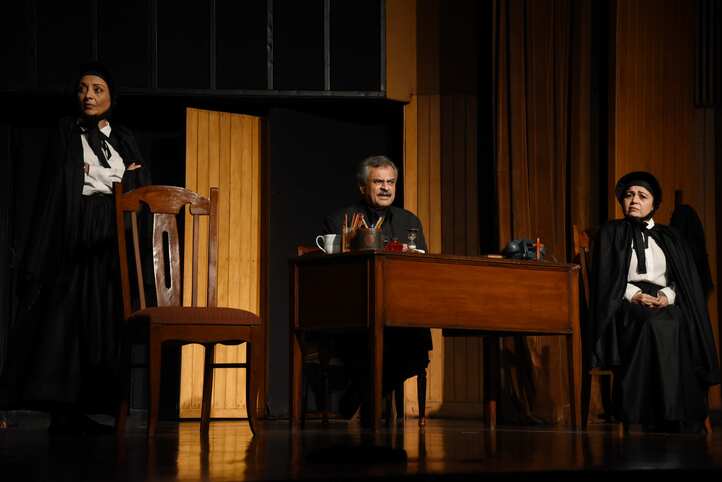
On September 4th and 5th, 2025, Delhi witnessed the staging of Doubt: A Parable, a Pulitzer and Tony Award-winning play by John Patrick Shanley. Directed by Sohaila Kapur, the production drew packed houses, reaffirming theatre’s power to stir debate and reflection.
Set in a Catholic Church in 1960s America, the play unfolds against the turbulence of the civil rights movement. When a nun suspects a priest of inappropriate conduct with a young boy, the story becomes a sharp exploration of suspicion, morality, and the elusive nature of truth. Shanley deliberately leaves the ending open, forcing the audience to wrestle with their own biases and convictions.
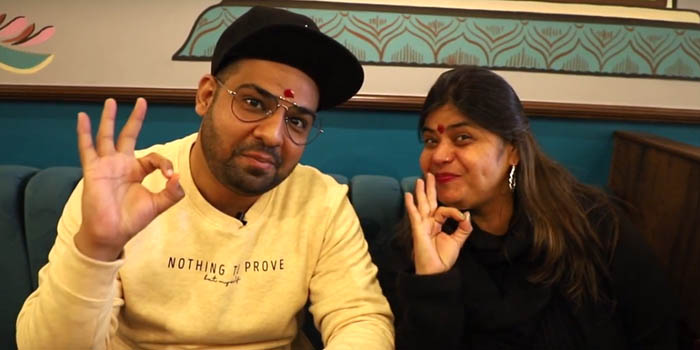
This Delhi production brought together a stellar cast including Sanjiv Desai, Kavita Seth, Arti Nayar, and Kritika Bhatia. With its intense dialogues and unresolved moral quandaries, the play resonated with contemporary audiences in an age of mistrust, intolerance, and polarisation.
“Doubt is a mirror that reflects our insecurities”
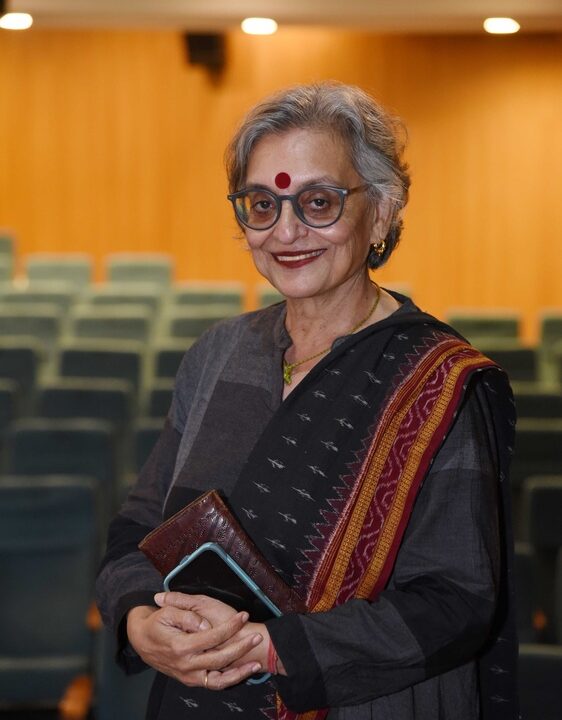
Speaking after the performance, director Sohaila Kapur reflected on why she chose to bring Shanley’s acclaimed play to India.
“I first watched the film starring Meryl Streep on Netflix, and it struck me as something that belonged to the stage. Later, when I discovered it was indeed a play, I knew I had to do it,” Kapur shared.
For her, the themes were not locked in history. “Issues like intolerance, suspicion, judgment, not hearing the other person out — these are as urgent today as they were in the 1960s. Human beings don’t change. When mistrust intensifies, it leads to conflicts and even wars. Doubt may be set in a church, but it mirrors the fractures in our world.”
The challenge of preparation
Rehearsals for the play were as layered as the script itself. Kapur revealed that the cast received scripts months in advance, but scheduling meant they could only come together a month before opening. “I worked in bits and pieces — rehearsing with whoever was available. The actors were intimidated by the monologues, so I encouraged them to learn their lines early and rehearse even on Zoom. By the time we gathered, they were ready to dive deep.”
On interpreting the ambiguity
The play’s open-ended nature has long sparked debate, and Kapur herself grappled with it. “There are things you don’t fully understand even through the dialogues. At one point I wondered — is the priest talking about his own struggles, or those of others? My interpretation is simple. I would stick to the play. Even if someone is gay, they deserve acceptance and dignity. Love is love, being gay is not a sin. The play challenges us to ask — will we judge, or will we listen?”
A timeless reminder
For Kapur, Doubt is more than theatre; it is a reflection of society’s deepest conflicts. “After Anand Hi Anand, which celebrated relationships, I wanted to explore suspicion and uncertainty in human bonds. Doubt transcends time and geography. It forces us to confront our prejudices, and reminds us that truth is rarely absolute.”
With its layered performances and Kapur’s sensitive direction, the Delhi staging of Doubt: A Parable not only revived a global classic but also sparked much-needed conversations about intolerance, identity, and the human need for compassion.